Coodra vs Netstock: Which Is Right for Independent Retailers?
Netstock serves mid-market planning teams with ERP integrations and weeks-long onboarding. Coodra is built for independent retailers who want decisions, not dashboards. Here is how they compare.

Michael Shahid • Founder & CEO
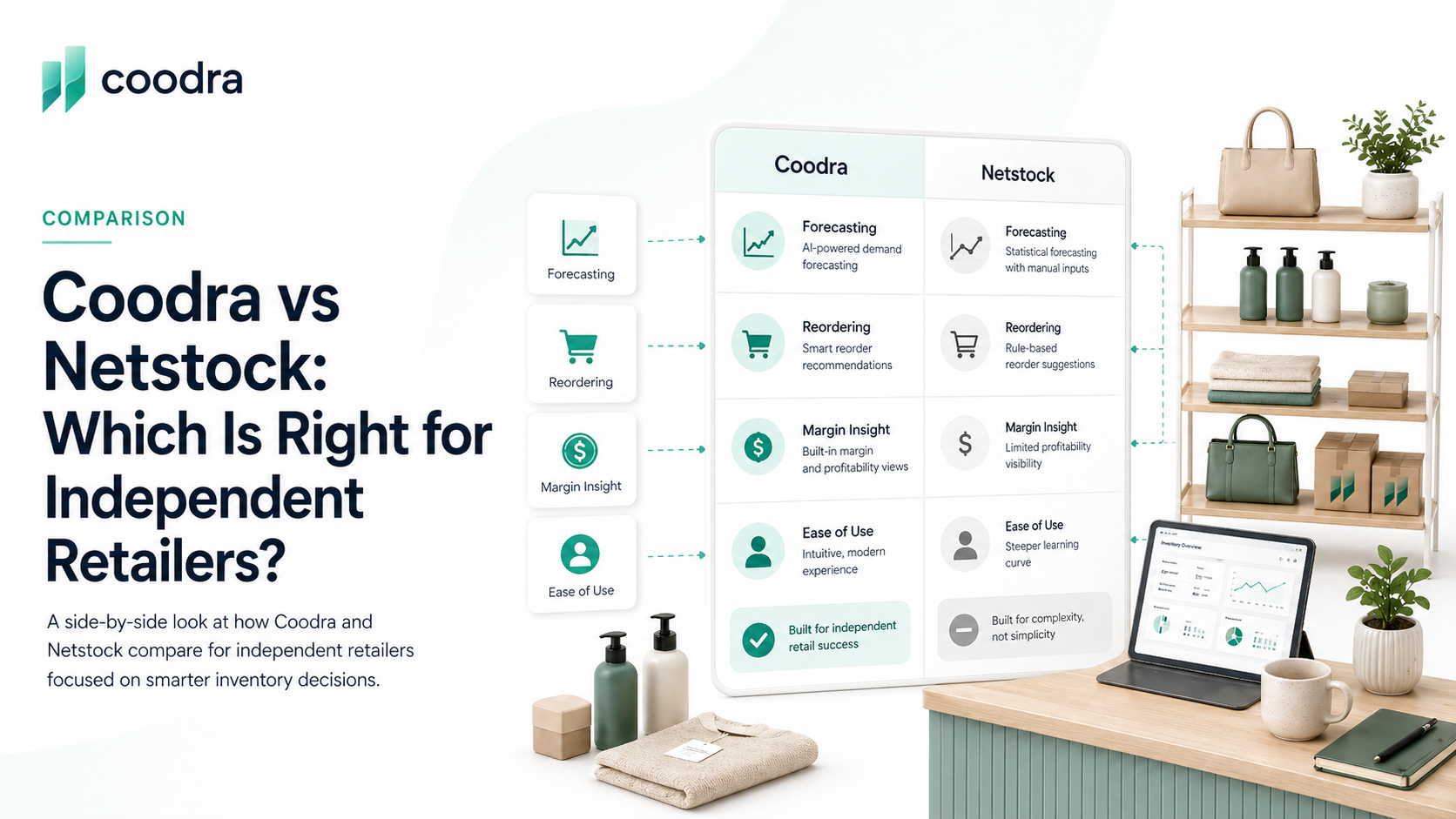
Netstock is one of the most visible names in inventory optimization for SMB and mid-market businesses. If you are researching inventory planning tools, you have probably found their content, their benchmark reports, and their comparison pages. They are good at being found.
This post is not about declaring a winner. It is about being direct about where each product fits and who it actually serves — so you can make the right decision for your store.
Who Netstock is built for
Netstock is an inventory optimization platform designed for businesses with existing ERP systems — NetSuite, Sage, Microsoft Dynamics, SAP Business One, and similar enterprise platforms. Their product assumes you have clean, structured inventory data inside an ERP, a dedicated person or team doing planning, and a multi-week implementation process to get the system configured.
If that describes your business, Netstock is worth evaluating seriously. Their demand forecasting, S&OP tooling, and supplier performance features are built for that operational complexity.
If it does not describe your business — if you are running Shopify or Square, have one to five locations, and are making inventory decisions between serving customers, Netstock's feature set is designed for a different problem than the one you have.
Who Coodra is built for
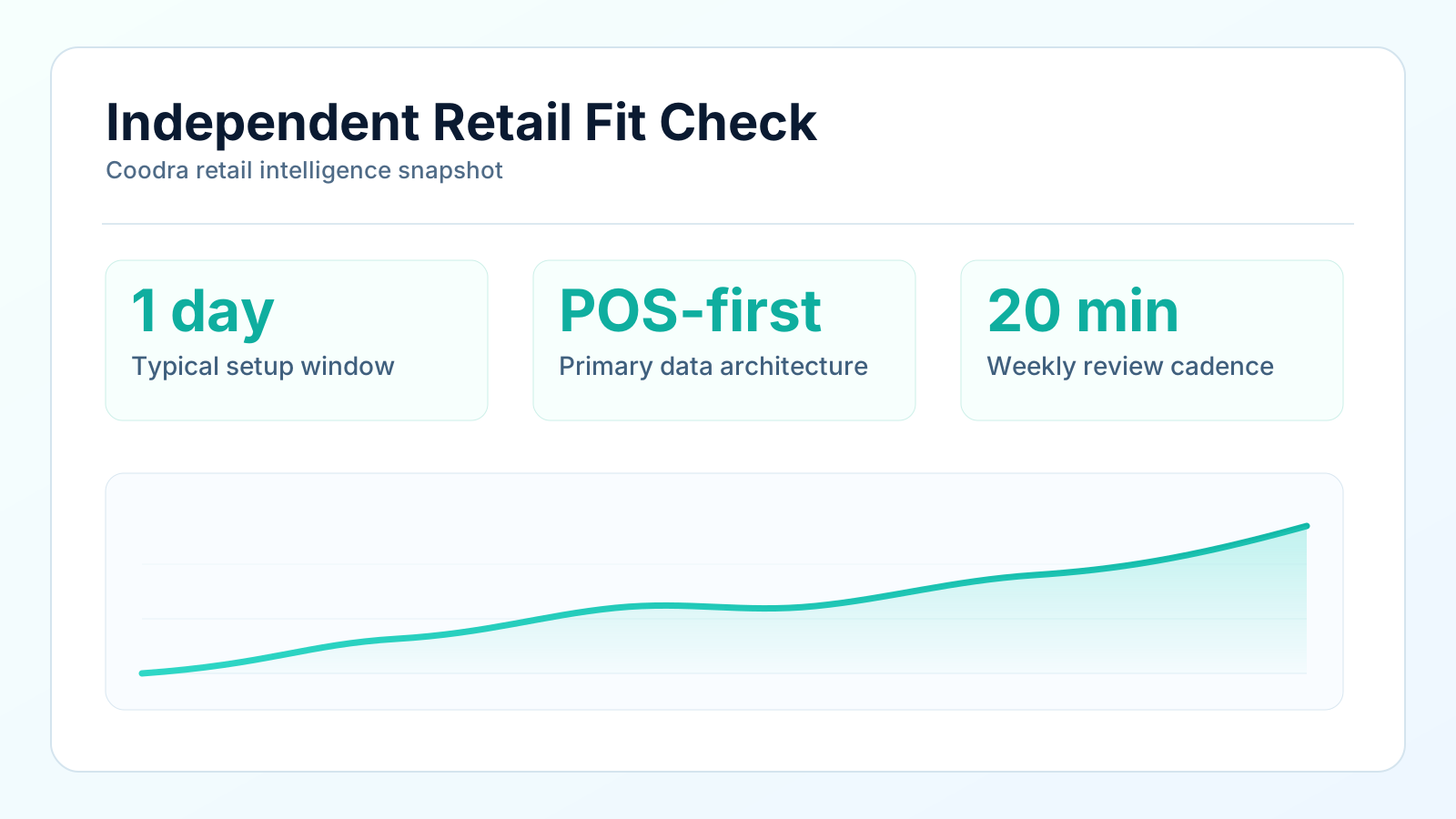
Coodra is built for independent retailers who do not have an ERP and do not want one. You connect your POS — Shopify, Square, Lightspeed, or Clover — and Coodra turns your sales and inventory data into a weekly ranked list of inventory decisions: what to reorder, what to reduce, what to hold.
There is no ERP required, no implementation project, no dedicated planner needed. The outcome is the same — better inventory decisions — but the path there is designed for a smaller, faster-moving business.
Setup and time to value
Netstock's implementation typically involves an ERP integration, data mapping, and a planning process that takes weeks to months to fully configure. For businesses that already have the ERP infrastructure in place, this is part of the cost of doing business. For independent retailers who do not have that infrastructure, it is a significant investment before seeing any value.
Coodra connects directly to your POS with no ERP dependency. Most retailers are live and receiving their first set of recommendations within one business day. The time from signing up to seeing a ranked inventory decision list is measured in hours, not weeks.
For a full side-by-side view of how Coodra and other alternatives compare on features, pricing, and setup time, see the comparison table.
Pricing transparency
Netstock does not publish pricing on their website — it requires a demo request and a sales conversation. For a business evaluating options quickly, this is a friction point. You cannot easily compare cost without committing to a conversation first.
Coodra publishes pricing on the website. You can evaluate whether the plan fits your store's volume without speaking to anyone. See Coodra pricing.
The independent retailer question
If you are an independent retailer — jewelry, pet supply, pharmacy, grocery, specialty retail — and you are running Shopify, Square, or Lightspeed, the honest answer to "is Netstock right for me?" is: probably not in its current form. Netstock's market positioning, pricing structure, and product complexity are all built around ERP-first businesses.
That does not mean Netstock is a bad product. It means they are solving a different problem. The question is whether that problem is the one you actually have.
Coodra was built specifically for independent retailers who have a POS, have sales data, and want to make better inventory decisions without adding enterprise software. Explore practical inventory resources. If that is your situation, apply for early access and see what your POS data has been telling you.
Primary sources
Was this helpful?