5 Signs Your Store Has Too Much Dead Inventory
Dead stock quietly drains margin every week it sits. Here are the five signals that tell you it is happening in your store before the damage compounds.

Michael Shahid • Founder & CEO
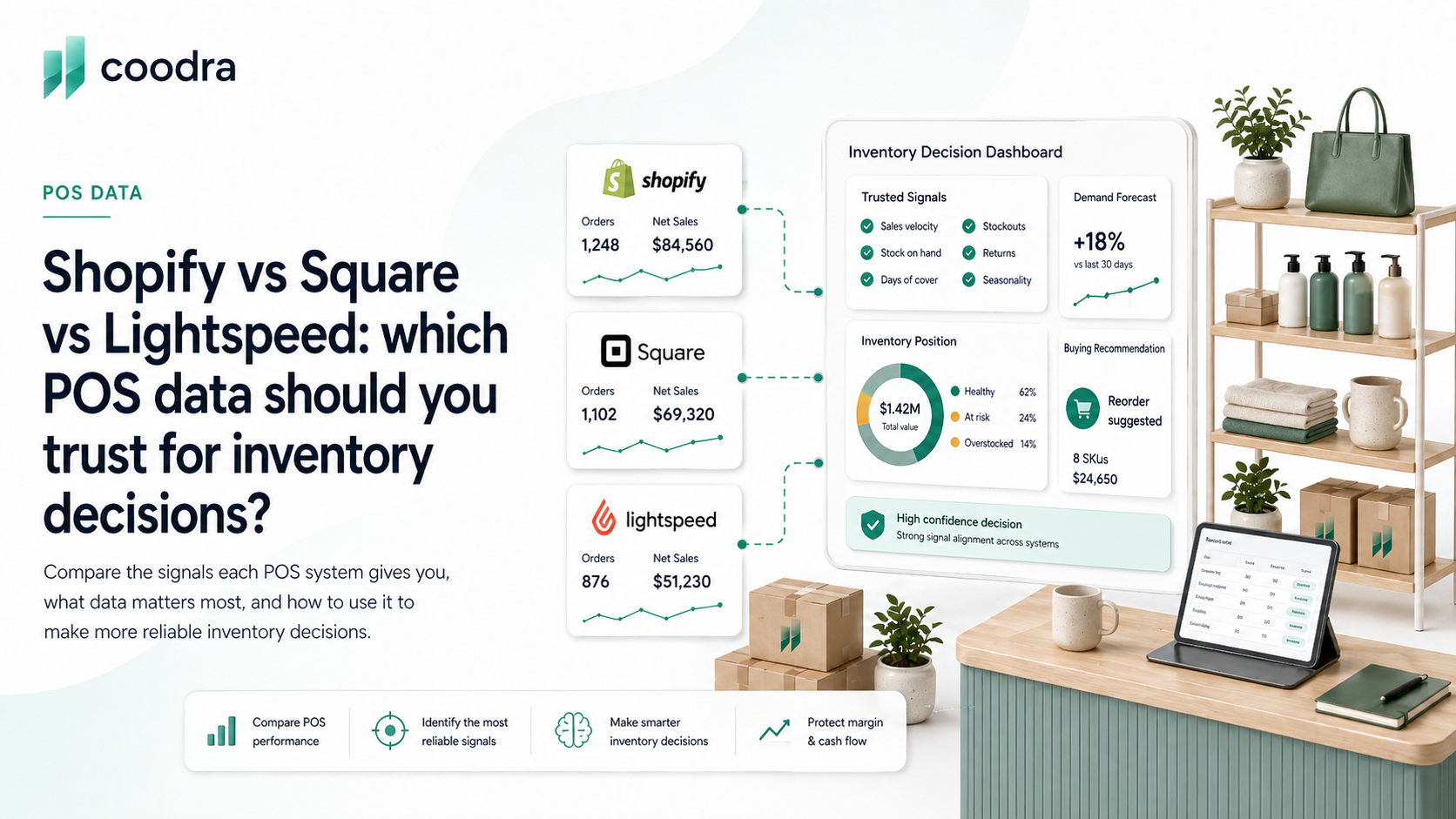
Dead inventory is not a catastrophe. It is a quiet, compounding drain. A SKU that should have been marked down in January sits on the shelf until April. The margin on that product erodes a little more every week — not in a dramatic collapse, but in the slow math of capital tied up in inventory that is not turning.
The hardest part about dead stock is that it does not announce itself. You have to know what to look for. Here are the five signals that tell you it is happening in your store.
Signs of dead inventory in a retail store: the five signals to watch for before the damage compounds
Sign 1: You have shelf space that used to be full and is still full three weeks later
Every retailer has a sense of which SKUs are slow. The signal worth acting on is not a product that has always been slow — it is a product that used to move and stopped. If a shelf space that was consistently replenished is now sitting at the same count for three or more weeks, that is not a temporary pause. That is a trend. And trends that go unaddressed become dead stock.
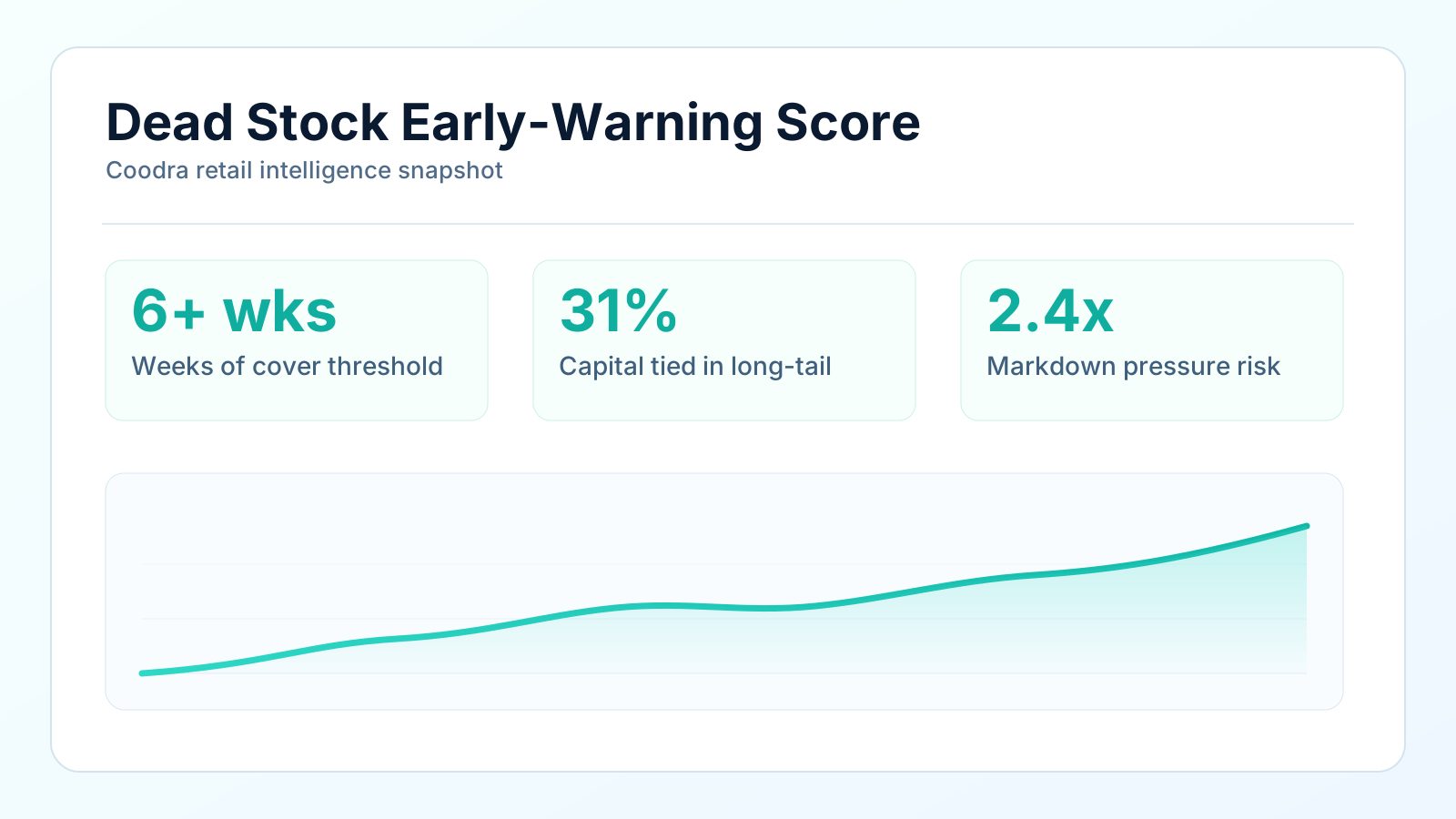
The action: pull the sales history on that SKU for the last 12 weeks. If velocity has dropped meaningfully and you have more than 6-8 weeks of supply on hand, initiate a mark-down conversation now — before it becomes a clearance problem at end of season.
Sign 2: Your stock count is regularly different from what your POS says it should be
Small stock count discrepancies are normal — mis-picks, return logging errors, a breakroom snack that walks out. Large, consistent discrepancies are a different problem. If your actual count is regularly 10-15% higher than what your POS shows, it means products are leaving your system without being sold. They are either being lost, stolen, or — most commonly — being returned to inventory but logged to the wrong SKU.
The result either way is the same: you reorder based on a phantom inventory position that does not exist. You over-order, the dead stock accumulates, and the cycle continues.
Coodra flags SKUs with anomalous movement — the ones where your count and your sales history tell different stories. See how inventory reconciliation works with your POS.
Sign 3: You are afraid to reorder some products because you are not sure they are selling
This is the behavioral signal. If your buyers — whether it is the owner or a purchasing manager — have a mental block on reordering certain SKUs because they are not confident in the data, that uncertainty is itself a symptom. It means the sales signals are noisy or contradictory. And noisy signals lead to under-ordering on things that are actually selling while over-ordering on things that are not.
The fix is not more intuition. It is cleaner data: a weekly sales velocity per SKU that your team can trust, reviewed consistently, so the reorder decision is not a guess but a data point. See how to calculate reorder points without a spreadsheet and apply them to every SKU where your team has historically hesitated to reorder.
Sign 4: Your clearance or mark-down sales are increasing as a percentage of total revenue
Every retailer marks down product. The warning sign is when mark-down revenue starts growing faster than total revenue — meaning you are generating a larger share of your sales from discounted product. This is the clearest financial signal that dead stock is accumulating faster than you are clearing it.
A healthy ratio for most specialty retailers: mark-down sales should represent no more than 8-12% of total revenue. If it is climbing above that consistently, your buying cycle is running ahead of your actual sell-through. You are ordering more than your store can naturally move.
Sign 5: Your gross margin is declining without a corresponding change in your pricing
This is the compound signal. Margin erosion without a pricing change usually has two causes: the cost of your product went up (not a dead stock issue), or you are moving too much inventory at a discount to clear it. The second cause is dead stock behavior, and it compounds because the urgency to clear dead stock leads to discounting that further erodes net margin.
If your margin is trending down and you have not changed your pricing or supplier costs, look at your inventory age report. The products with the most weeks of supply on hand are the ones dragging your margin.
Coodra surfaces the inventory decisions worth acting on every week — including which SKUs are accumulating dead stock before they force a mark-down. See how it works.
The retailers who manage inventory best do not have better intuition. They have a weekly review rhythm — a consistent look at what is running, what is stalling, and what needs action before it compounds. The five signals above are your trigger for that review. The question is whether you have a system that surfaces them automatically, or whether you are waiting until they become impossible to miss.
The five compounding inventory mistakes that drive dead stock accumulation follow the same pattern. Knowing the signals is the first step — having a system that acts on them is what protects your margin.
Primary sources
Was this helpful?