What Inventory Planning Actually Means for Independent Retail (and How to Do It Without a Planner)
A practical operating guide for independent retailers: use reorder points, demand velocity, lead time, and safety stock to run a weekly inventory rhythm that protects margin, reduces stockouts, and keeps cash in motion.

Founder & CEO, Coodra
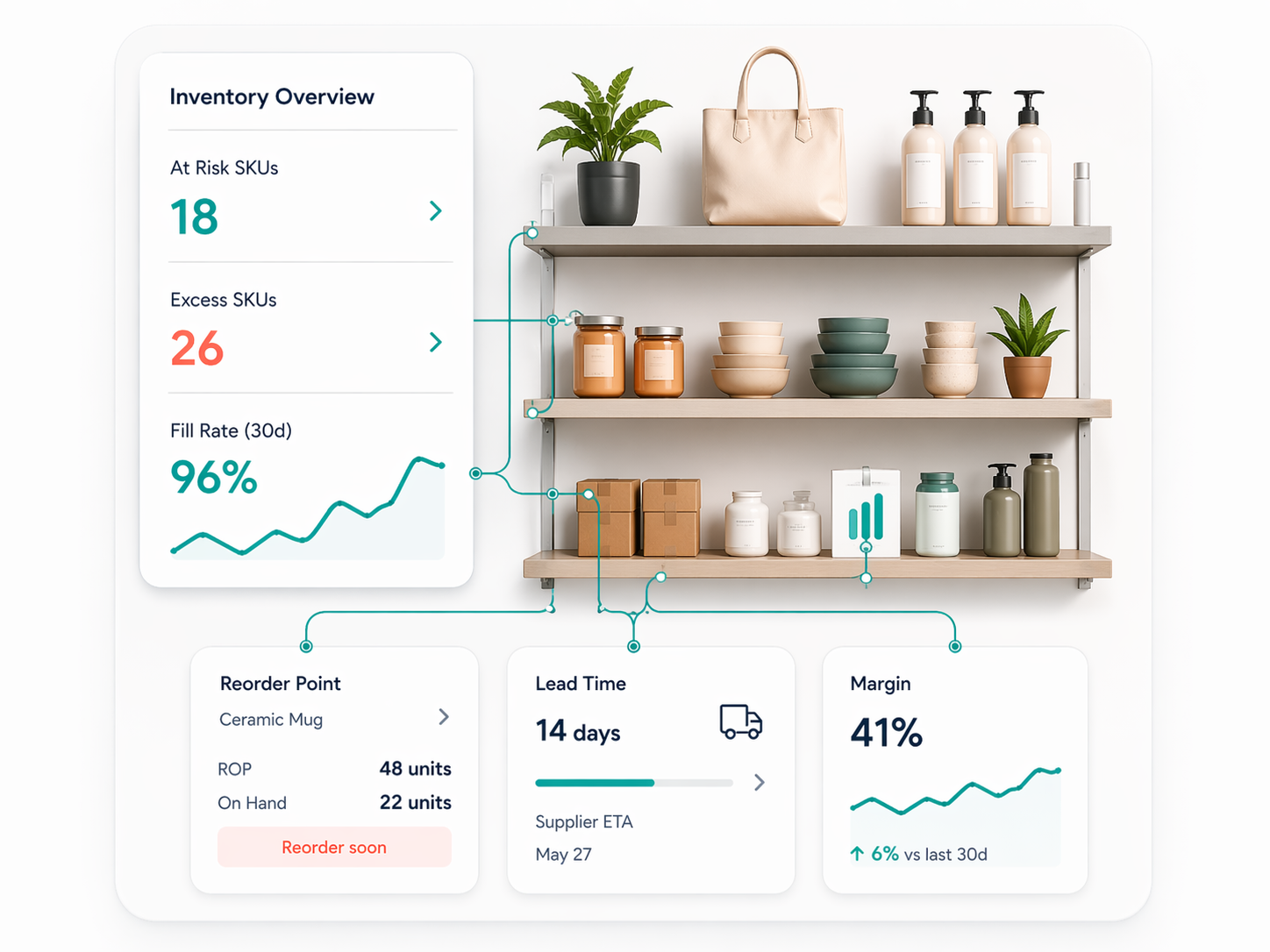
Why inventory planning matters for independent retail
The phrase "inventory planning" sounds like something enterprise retailers do — supply chain teams, ERP systems, monthly S&OP meetings. Most independent retailers look at that and think: that is not for us. And they are right — but not for the reason they think.
Inventory planning for independent retail does not require a planner or enterprise software. It requires a clear answer to one question every week: based on what sold, what is on the shelf, and what is coming in, what should I actually order right now?
That is the whole thing. Everything else — demand forecasting, safety stock calculations, seasonal adjustments — is commentary on those three inputs. And for independent retailers running Shopify POS, Square, or Lightspeed, the data to answer that question sits in the system you already use.
Fewer stockouts
Protect high-demand SKUs before shelves go empty and customers go elsewhere.
Less excess
Cut overbuying on slow movers before it compounds into margin pressure.
More cash flow
Move working capital toward your fastest-turn products, not dead stock.
Smaller teams
The buyer is also the manager. The system has to fit a real operating schedule.
The weekly workflow: three questions, 20 minutes
The inventory planning workflow that fits independent retail is not a 12-step process. It is a weekly review with three questions, answered in order. If you only have 20 minutes, answer those three questions and act on the one decision that matters most this week.
Which SKUs are approaching their reorder point?
Pull current on-hand inventory from your POS, sort ascending. Cross-reference with average weekly sales. Any SKU below 4 weeks of on-hand is a candidate; below 2 weeks is urgent.
Which SKUs are trending up before stockout hits?
Compare your top 20 SKUs by volume over the last 4 weeks against the prior 4 weeks. Products selling 20% or more above their baseline are signaling demand shift — usually before you run out.
Which SKUs have excess accumulating?
Calculate weeks-of-cover: on-hand divided by average weekly sales. Any SKU above 6 weeks of cover is accumulating excess. Reduce the next PO quantity until velocity catches up.
The retailers who run this consistently are not doing it because they have more time. They do it because they have built it into their week as a non-negotiable operating habit — the same way they count the cash drawer. It takes less time than checking email, if the system surfaces the answers automatically.
See the reorder point formula without a spreadsheet, and learn how Coodra surfaces all three questions in a single ranked view.
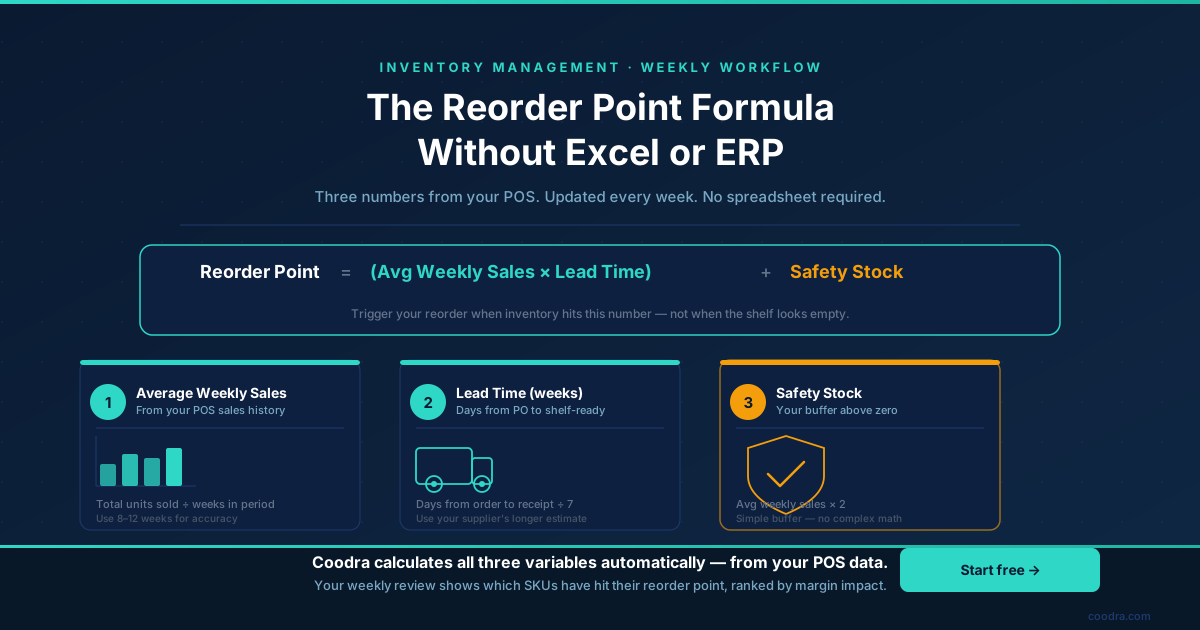
Reorder point: the simplest formula
Use this baseline to set a consistent trigger for every core SKU.
- Average Weekly Sales: units sold per week over the last 4–12 weeks
- Lead Time: actual days from PO sent to shelf-ready, not the quoted number
- Safety Stock: buffer for demand and delivery variability
Example: a SKU selling 5 units per week, with a 3-week lead time and a 1-week safety buffer. ROP = (5 × 3) + 5 = 20 units. When on-hand drops to 20, place the order.
Sales velocity: your early warning system
Do not wait for stockouts to confirm demand changes. Compare current 2-week sales velocity to the prior 4-week baseline by SKU. Large positive deltas often appear one to two reorder cycles before a shelfout.
The signal to watch: a product that sells 20% more than its 4-week average in back-to-back weeks. That is not noise. That is a demand shift, and the reorder point that made sense three weeks ago may no longer cover the new reality.
How to pull and interpret sales velocity from your POS — five questions every POS can answer weekly.
Lead time: the variable most independent retailers skip
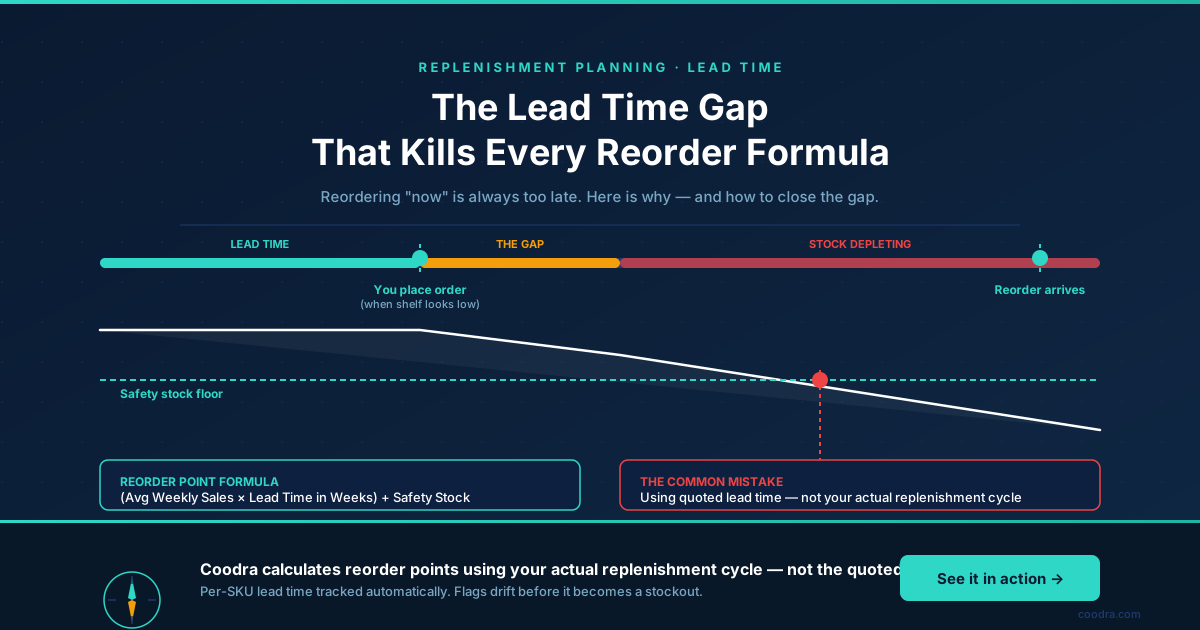
When you see a SKU at 3 weeks of on-hand supply, the question is not "is this enough?" The question is: given my supplier's lead time, will this be enough when the reorder arrives?
If your lead time is 3 weeks and you have 3 weeks of supply on hand, you are ordering at the edge of a stockout. One unexpectedly strong seller week and you are empty before the order lands. The fix: plan with your actual median lead time per supplier — not the quoted number.
Quoted lead times are usually optimistic. Planning from actual received lead times materially improves reorder timing. Track median lead time by supplier class and review it monthly for drift — especially around holidays and disruptions.
Lead time drift is the most common cause of stockouts that feel inexplicable. The retailer did nothing wrong with their demand forecast. They just did not update the lead time assumption when the supplier started running slow.
Safety stock without overcomplicating it
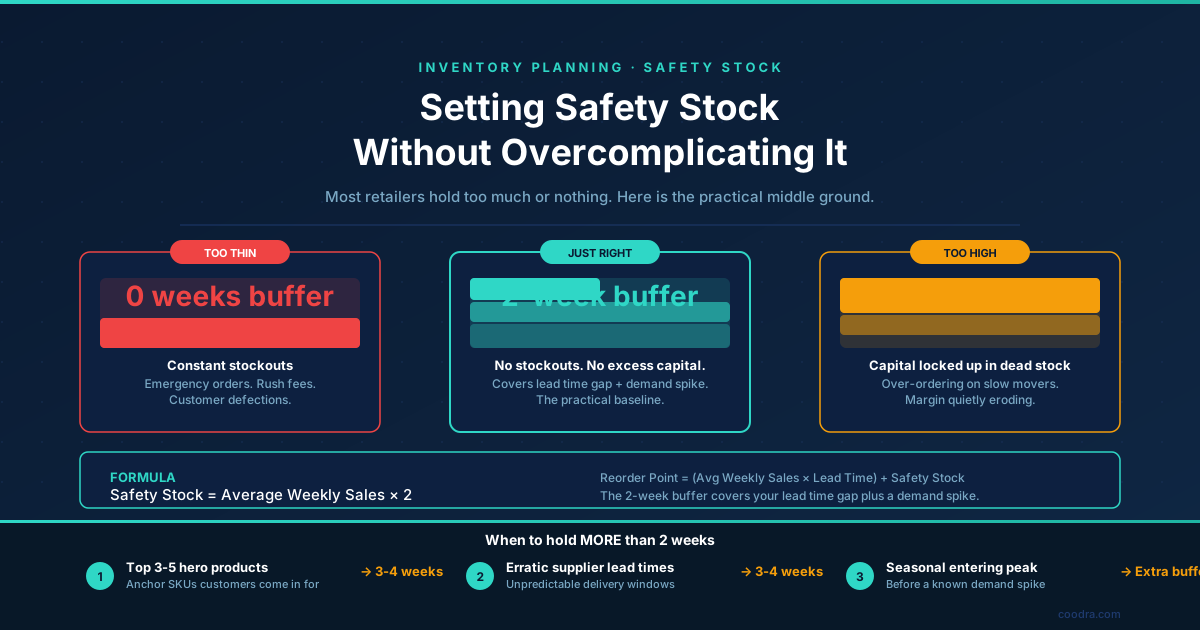
Safety stock protects service levels during demand spikes and delivery variability. For most independent retailers, the starting point is simple: two weeks of average weekly sales as a buffer per SKU.
That is not the order quantity — it is the trigger level. When inventory hits the safety stock buffer, it is time to act, not time to panic. The reorder still follows the ROP formula. The safety stock just prevents the panic.
Two adjustments to make: first, high-velocity SKUs warrant a higher buffer because a stockout on your best seller is the most expensive stockout. Second, SKUs from unreliable suppliers warrant a higher buffer because delivery variability is higher.
The two-week velocity buffer method for safety stock — and when holding more actually makes sense.
Putting the four signals together
The weekly inventory review is not four separate exercises. It is one exercise that combines four signals: ROP status, velocity changes, lead time assumptions, and buffer adequacy. The output is always a ranked action list.
Rank by what has the highest margin impact and the highest stockout risk. The top item on the list this week may not be the SKU with the lowest on-hand quantity — it may be the highest-margin SKU where a stockout would cost the most in gross profit, even if it is not yet at its reorder point.
Coodra runs this combination automatically every week from your POS data and presents the output as a ranked decision list — not a dashboard to explore. Apply for early access and see what the first weekly review looks like for your store.
Tools that fit independent retail
The best inventory planning tool is not the most complex one. It is the one your team can execute every week with low friction. For independent retailers, that means three things: POS-connected reporting so data is current automatically, clear threshold settings so the system flags what needs attention, and one approval flow to turn the ranked list into action.
Enterprise planning tools exist and they solve a different problem — multi-warehouse optimization, statistical demand forecasting across thousands of SKUs, automated PO generation weeks in advance. If that is your operation, those tools make sense. If you run one or two locations and the buyer and manager are the same person, the right tool answers three questions in a single view and gets out of the way.
See how Coodra compares to Netstock, Cin7, and other planning tools — and why most independent retailers do not need a planner.
Related reading
Make smarter inventory decisions every week.
Coodra surfaces what to reorder, what to hold, and what to fix next — ranked by margin impact.